
Flat lay or model? Comparing the same garments
Compare the same garments in flat lay and on-model images. See what each format shows, what it cannot prove and why original detail photos still matter.
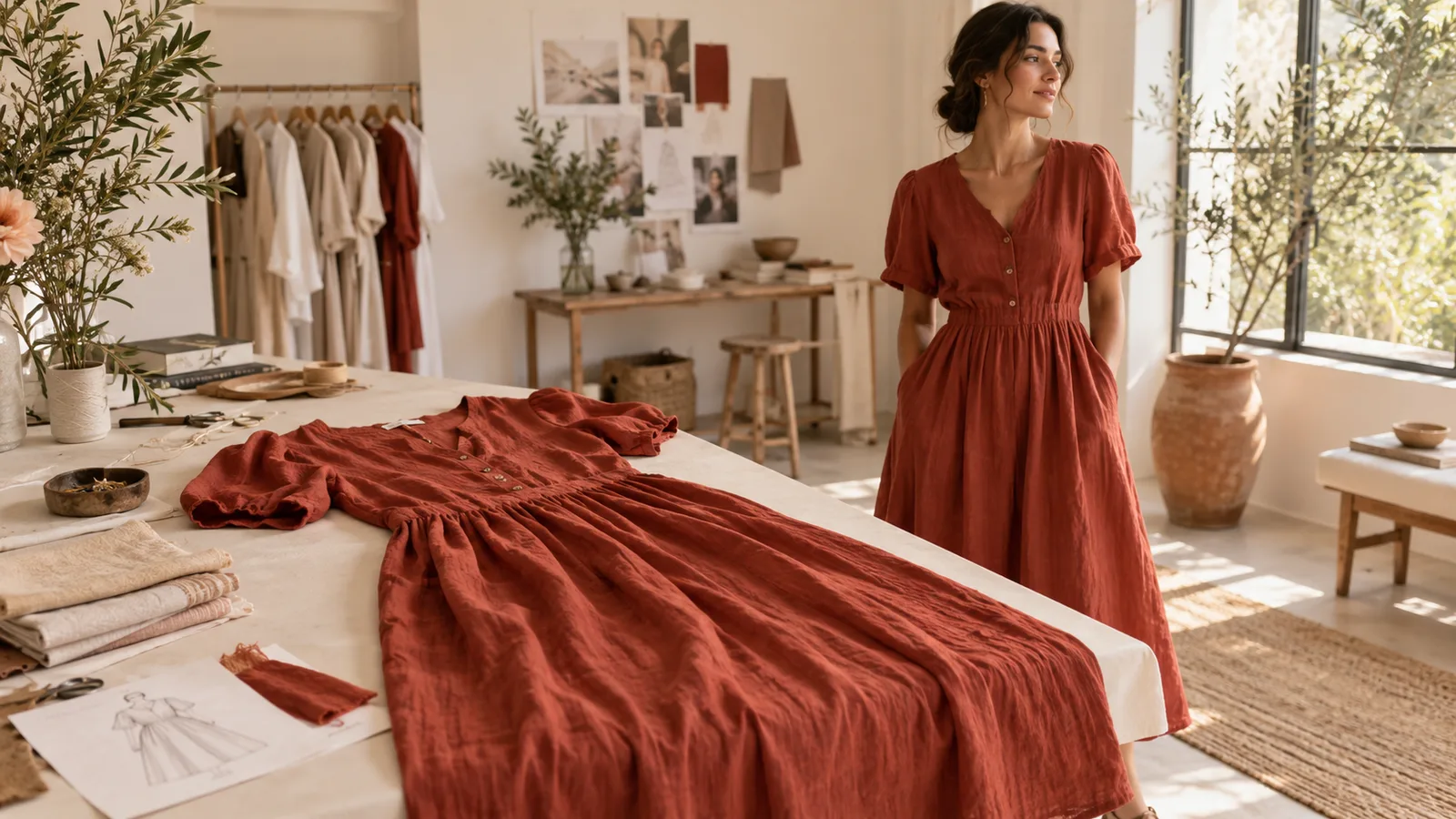
Flat lay makes the outline and arrangement of details easier to inspect. A model image adds styling context. Neither format is universally better: choose according to the information your audience needs and the publication channel’s rules.
What each format can show
| Need | Flat lay | On a model |
|---|---|---|
| Outline and symmetry | Easier to compare | Depends on pose |
| Pockets and fastening | Often less obstructed | Can disappear into folds |
| Styling context | Limited | More apparent |
| Measurements | Require measuring the real item | Cannot provide reliable measurements |
| Actual condition | Original photographs document it | AI may change it |
For each example below, the same input file was used for both Vougly visualisations. We are not comparing different garments or drawing conclusions about conversion rates.
Vougly examples: input and AI visualisation
These are our own Vougly results, using the identical input photograph for both modes. They are visual examples, not a sales experiment or a measure of reliability across the whole app.
Multicoloured crochet dress
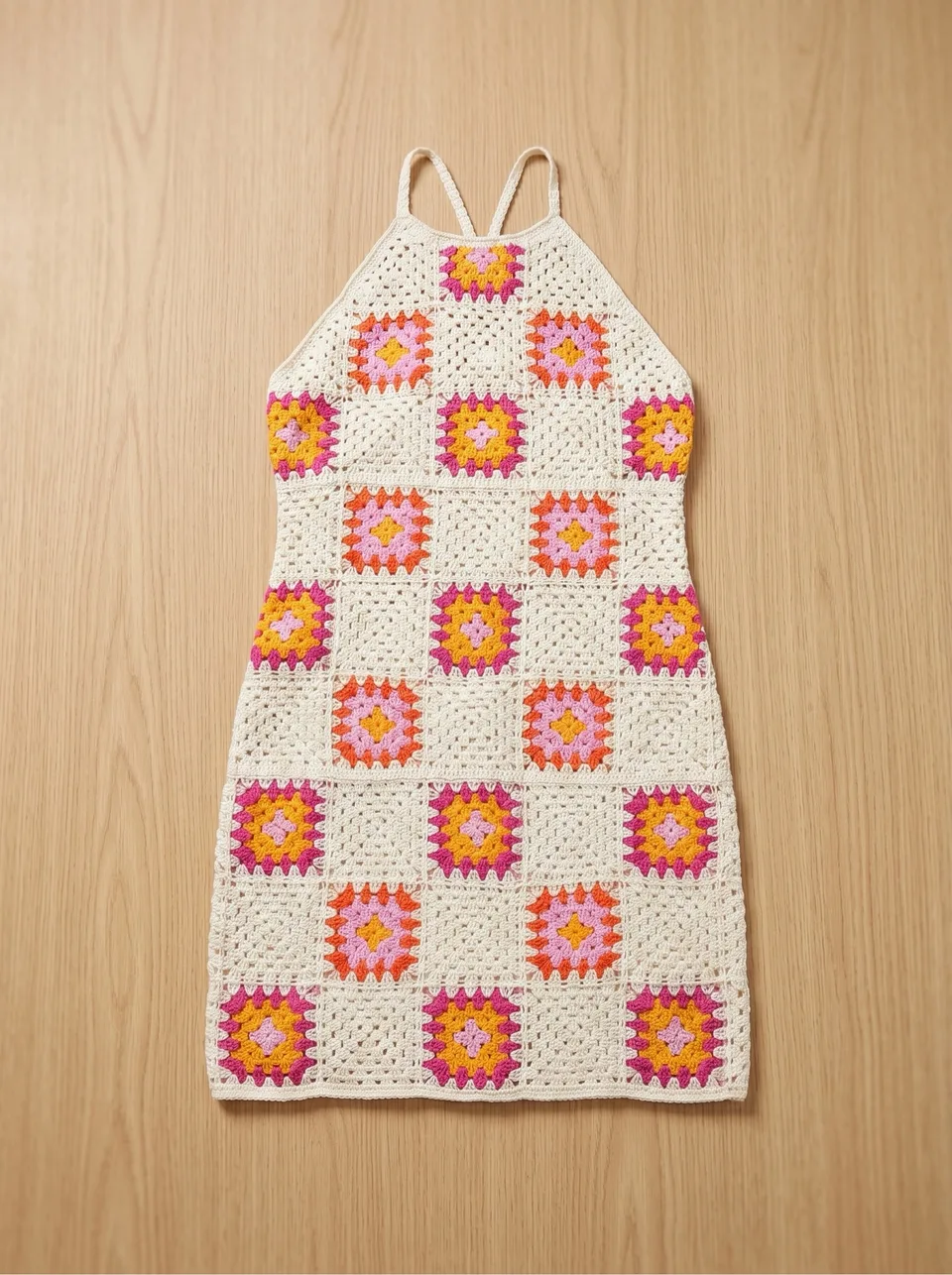
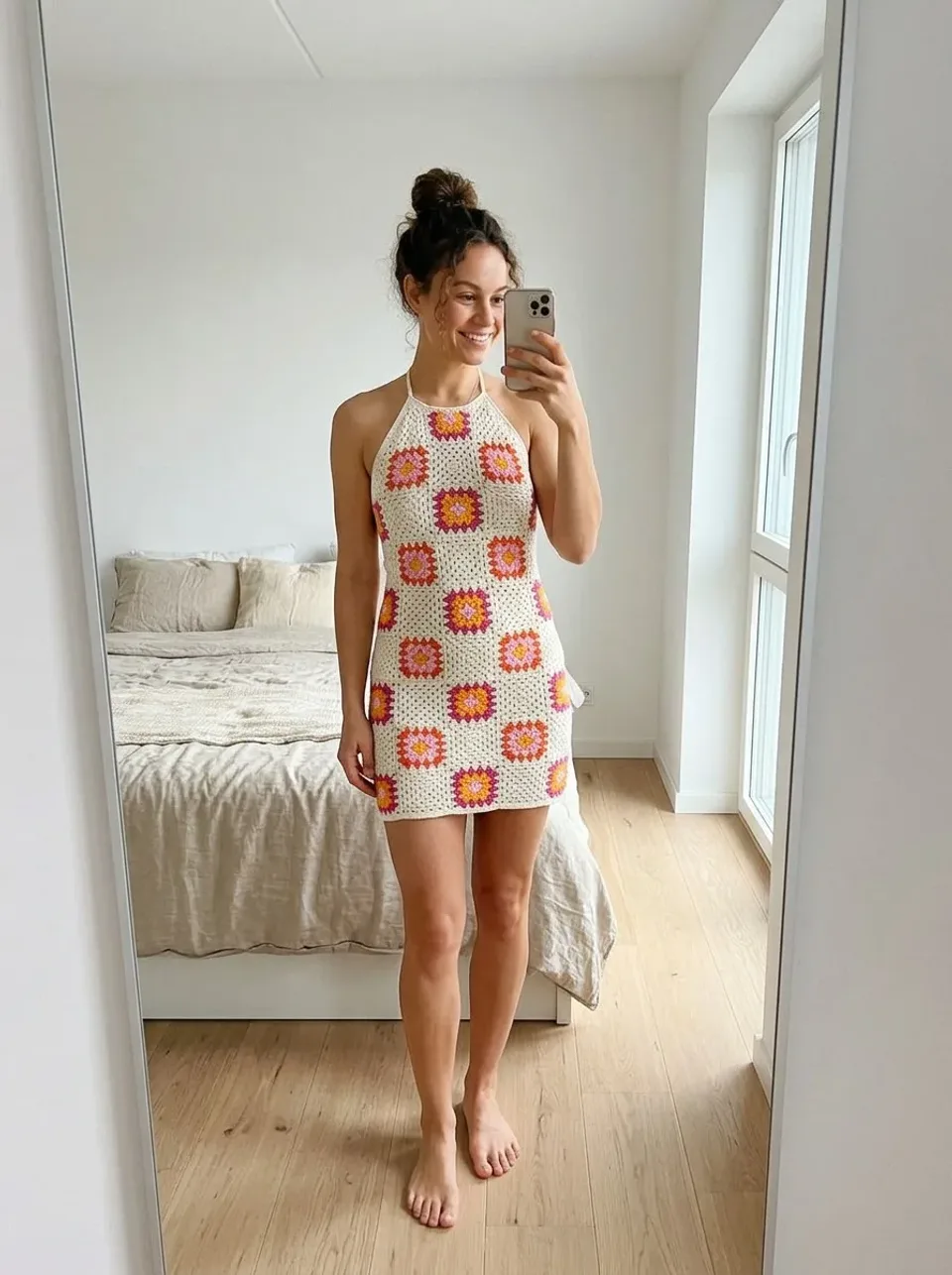
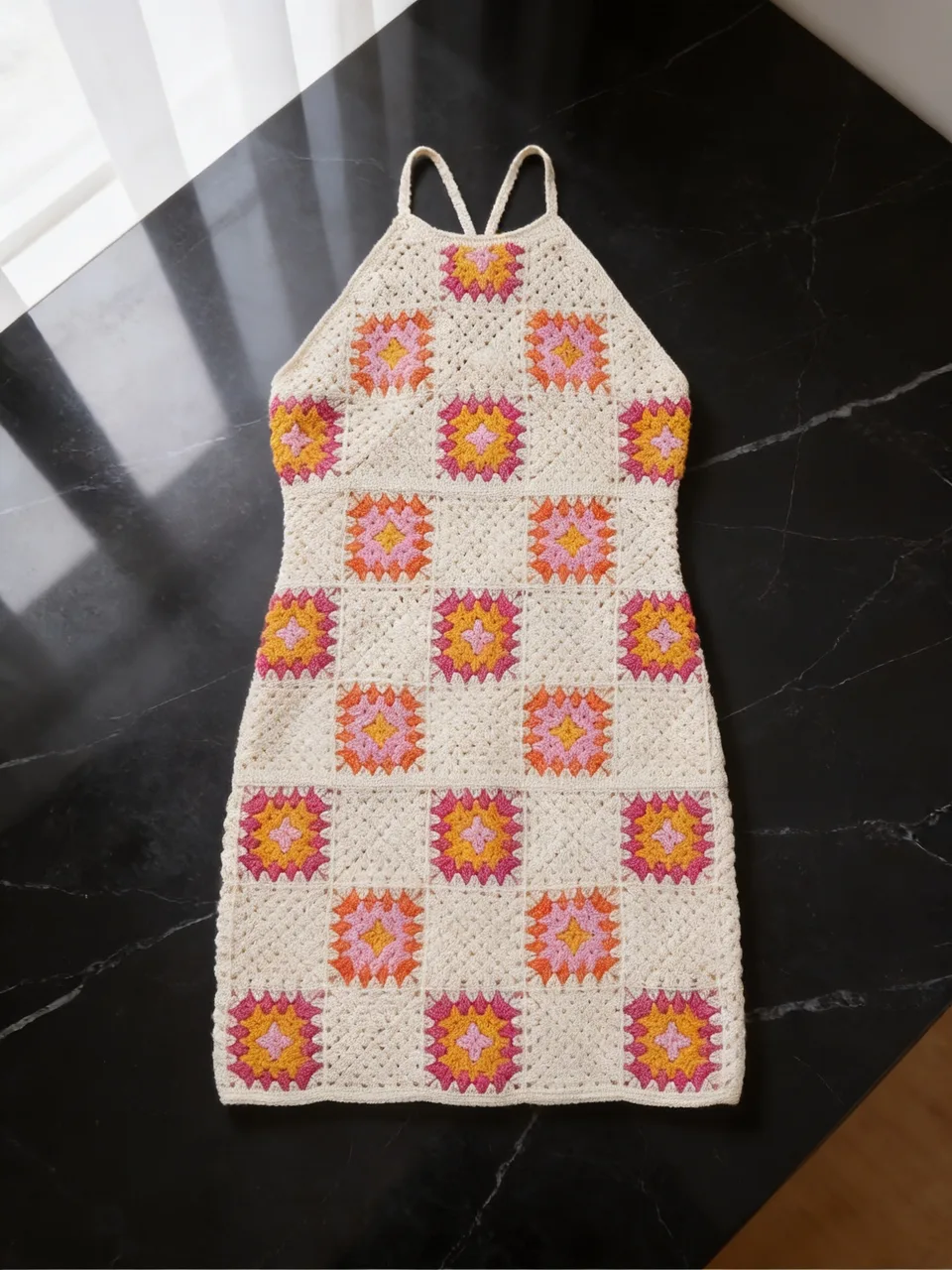
The pattern repeat on the model differs from the input. An attractive silhouette does not prove that every coloured band is accurate.
White lace dress
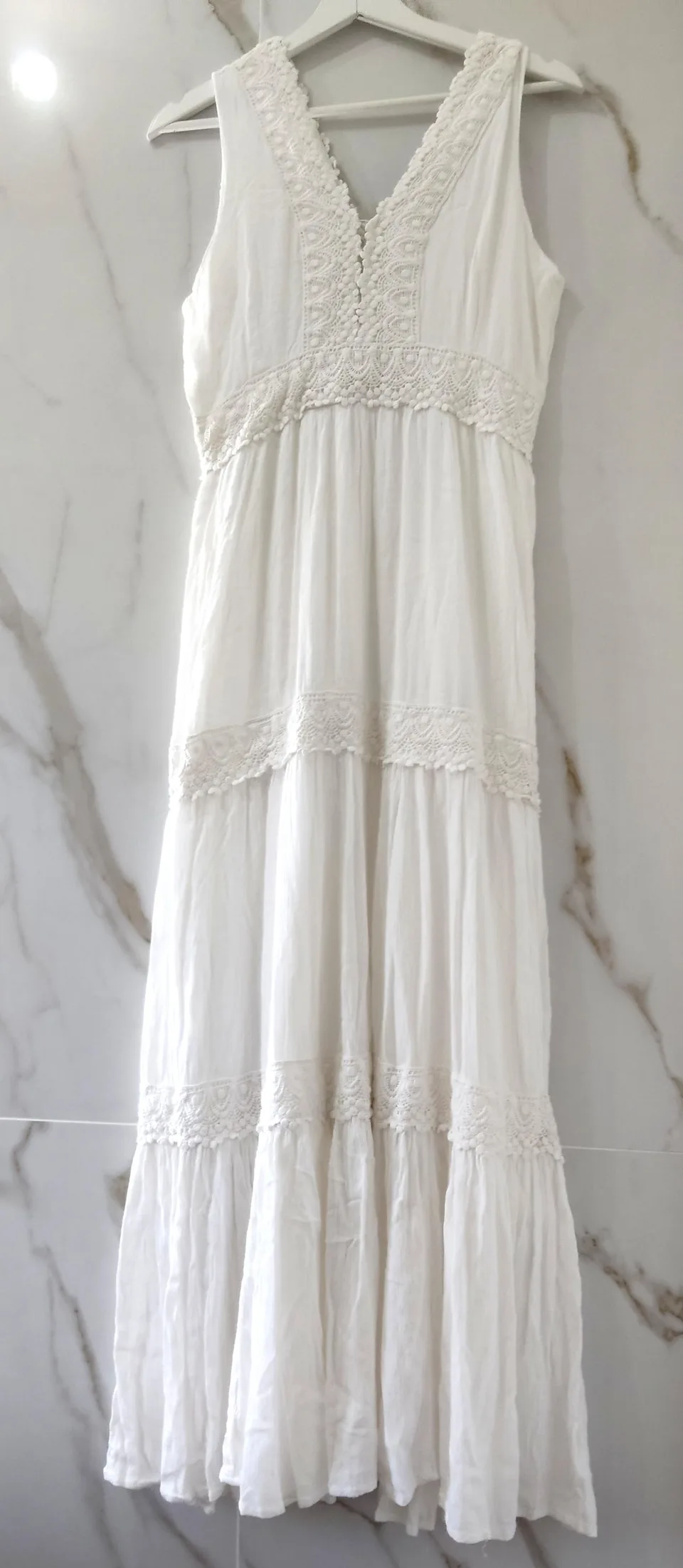
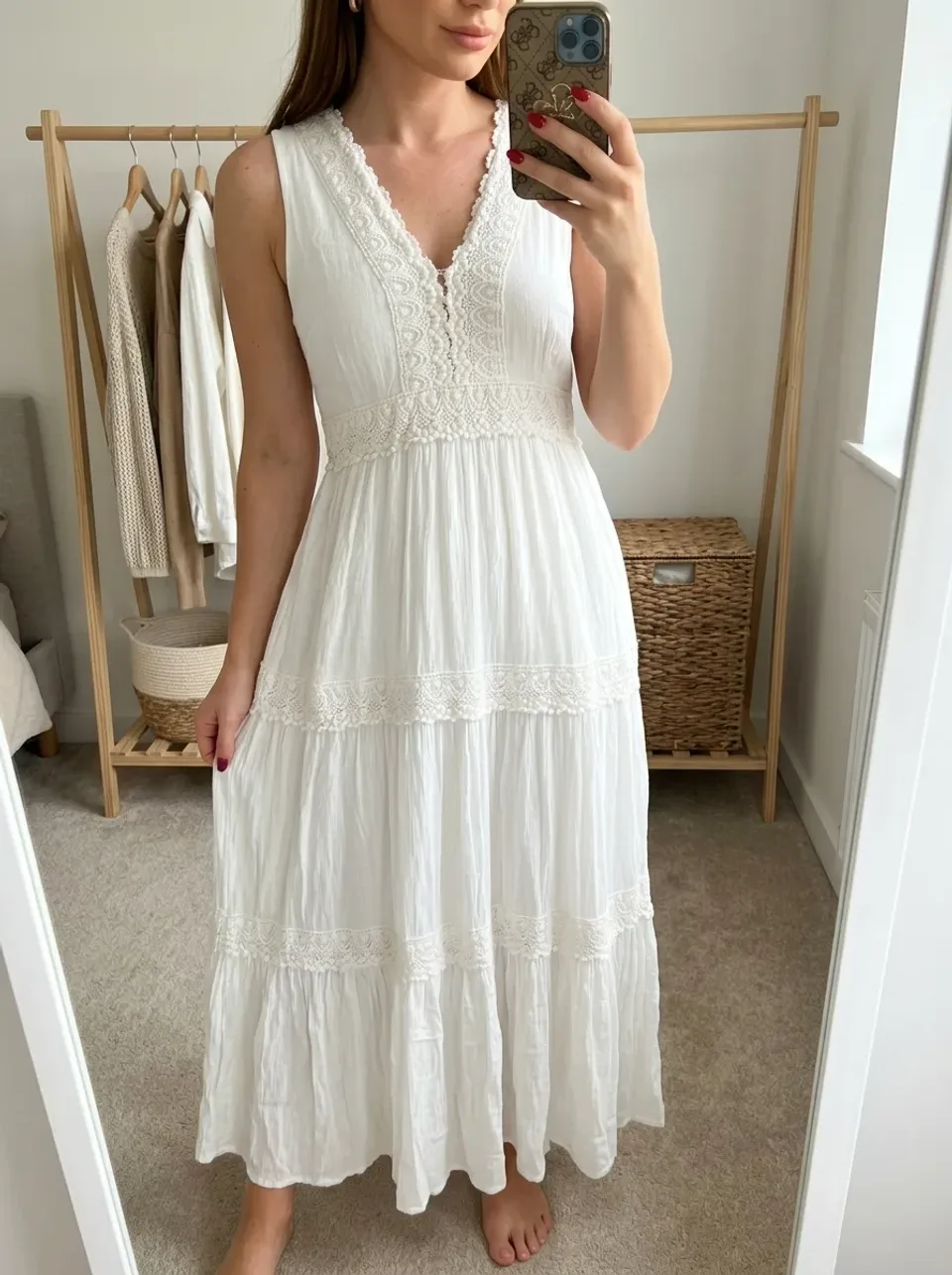
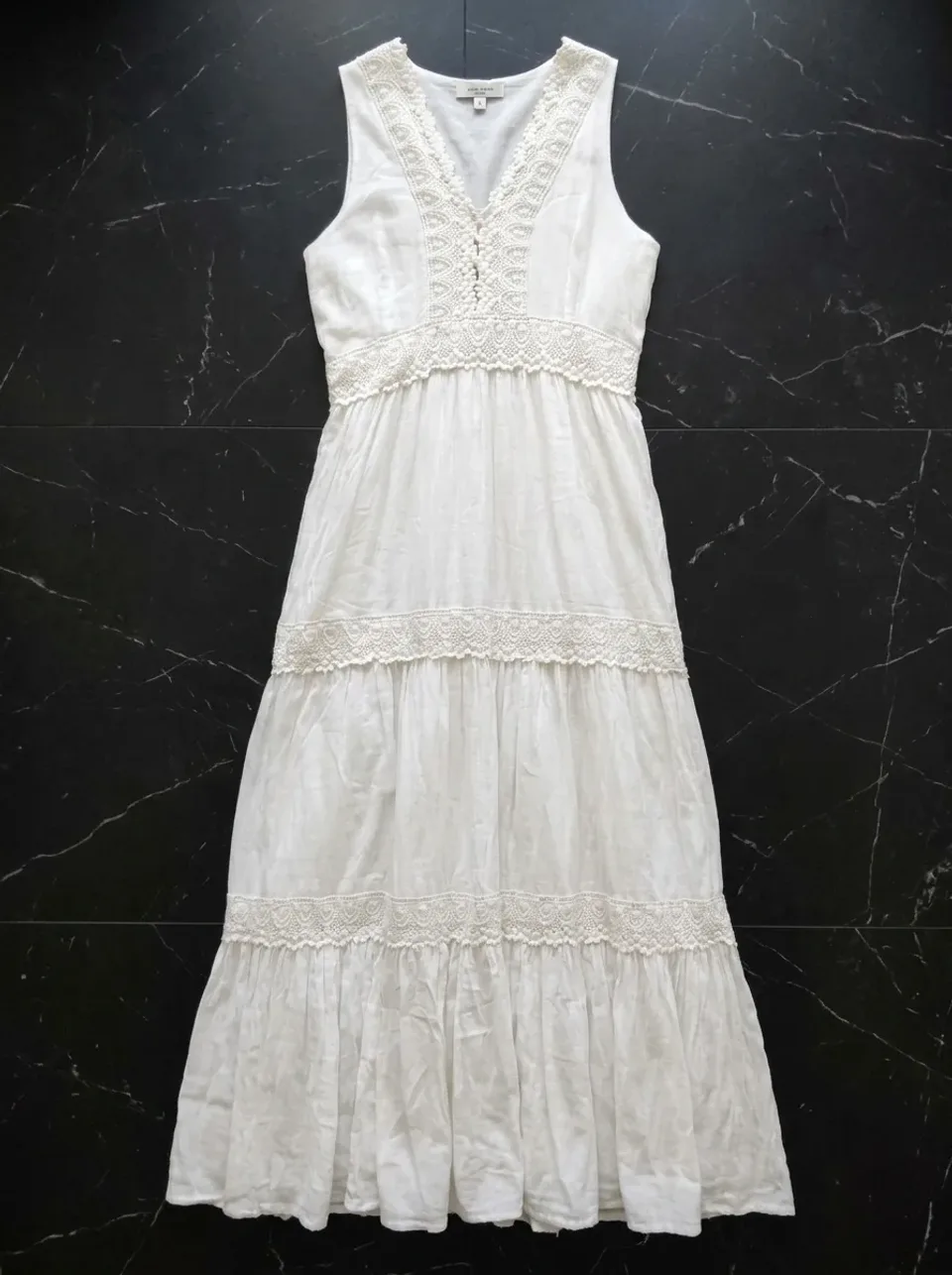
Compare length, tier placement and hem drape. The visualisation does not establish how the dress fits a real person.
Olive cropped jacket
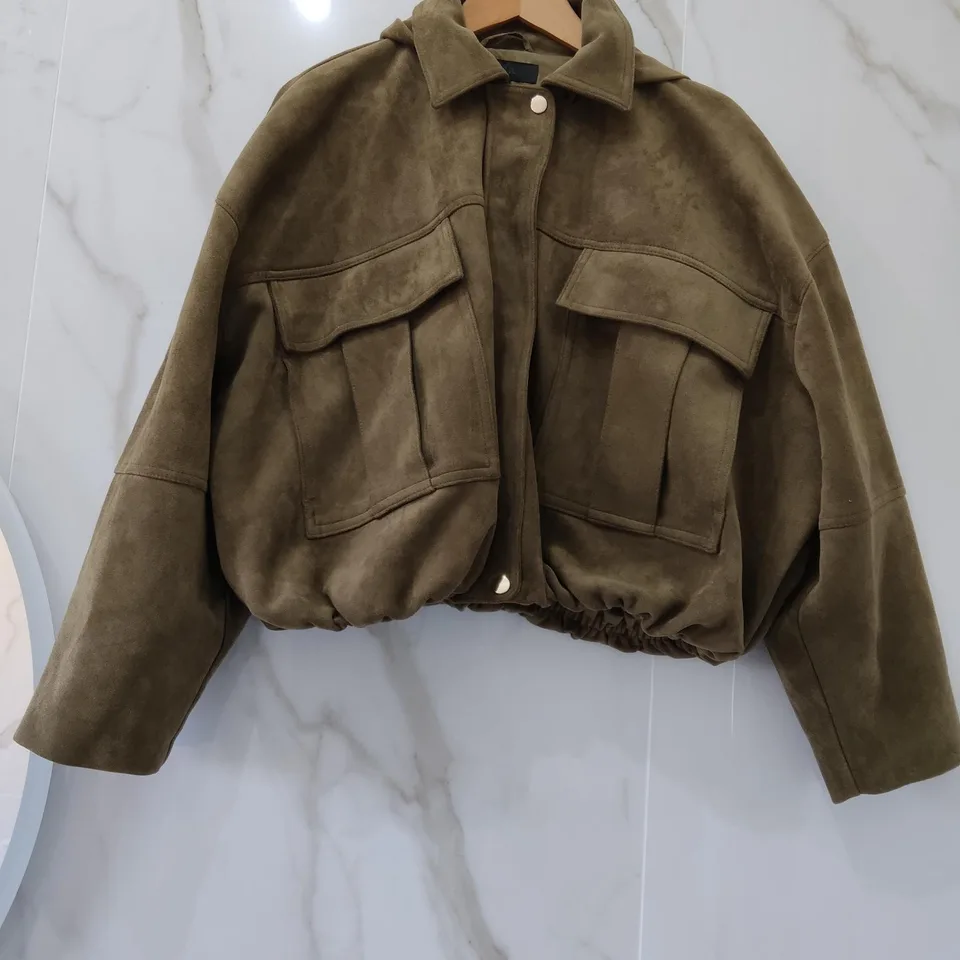
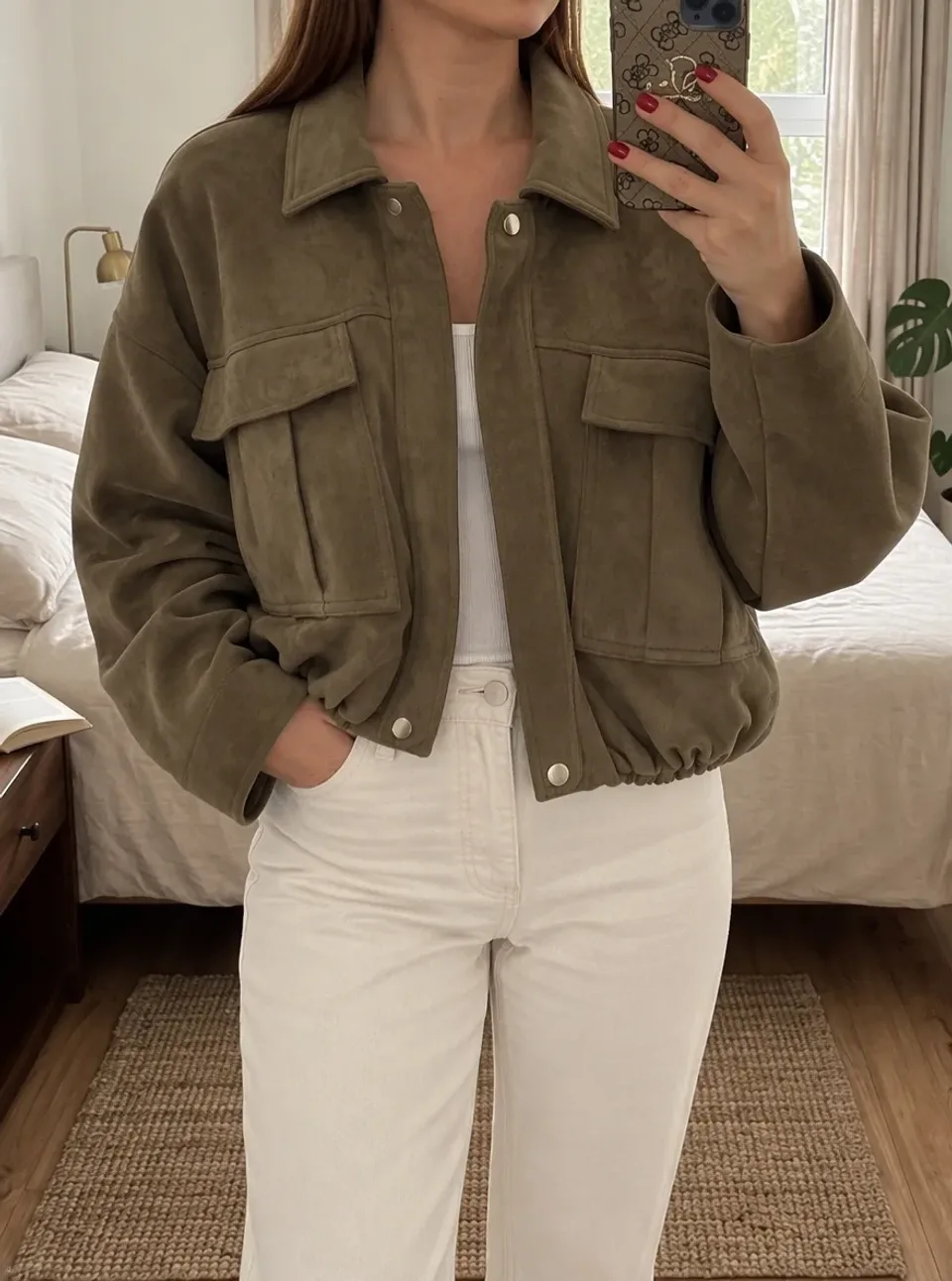
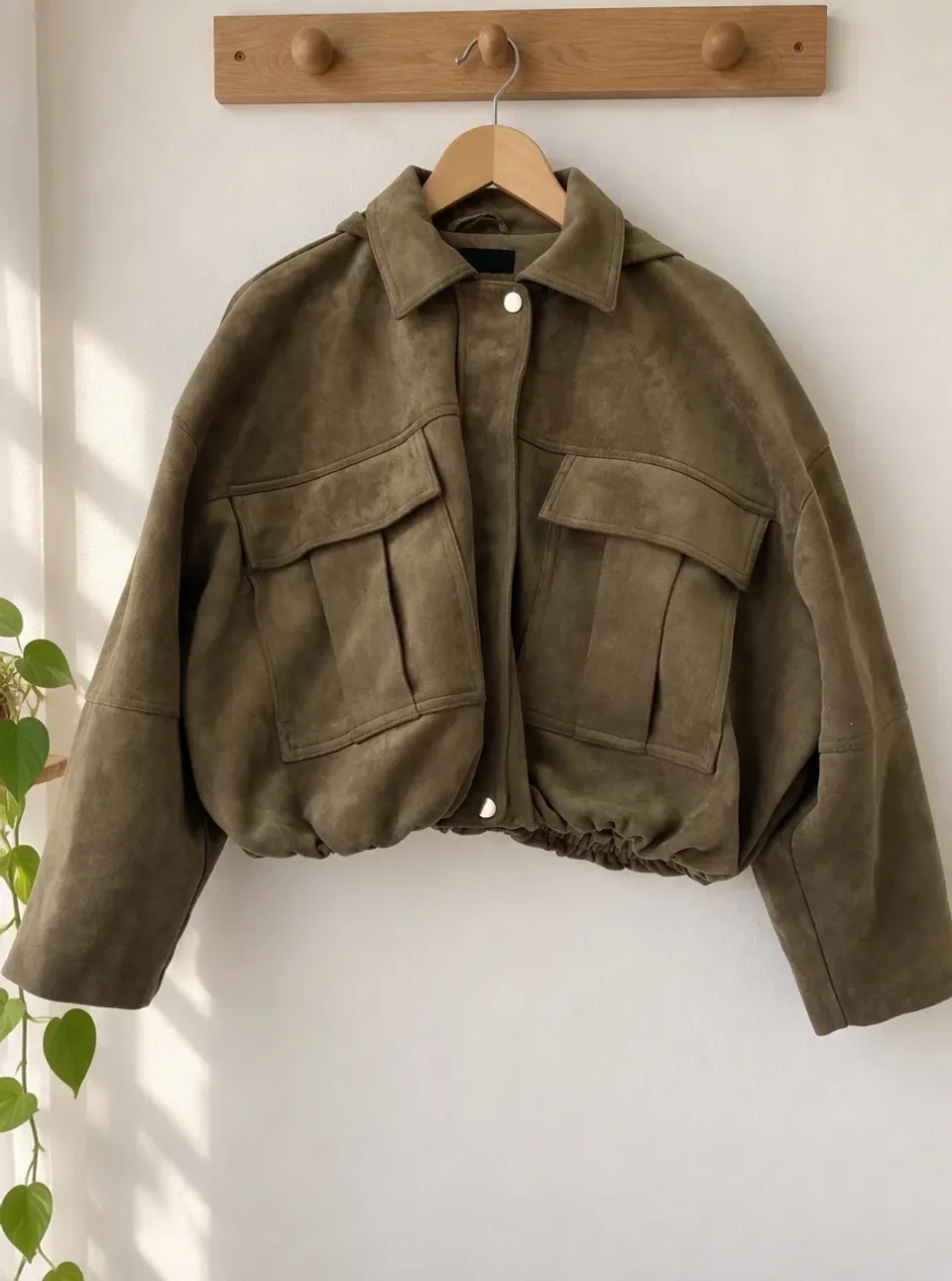
The jacket remains on a hanger: this result changes the background and is not a flat lay.
Check pockets, buttons, zip and hem. A pleasing background colour says nothing about jacket accuracy.
Choose according to the garment
For a busy print, start with a readable front and back. For a jacket, show pockets, fastening and lining. For a dress, add measured length and width rather than treating an AI silhouette as evidence of fit.
Where a channel permits AI, a visualisation can illustrate a styling idea while your own photographs document the item. On Vinted, use your own unedited photographs. A generated image in an additional slot does not avoid the catalogue requirements.
We do not claim that one format sells a fixed percentage better. That requires a controlled study; three image examples cannot establish it.
Vougly uses subscriptions. Each mode uses 1 generation from your available allowance; adding your own model is free. Check current prices and terms in the app. A visualisation is not evidence of fit or a sales guarantee.
Sources and review
Official Vinted Catalogue Rules. Checked 8 October 2026.
Vinted rules: on Vinted, use your own unedited photographs.