How to price clothes on Vinted without guessing
Build a realistic asking price from comparable items, condition and your minimum proceeds. Includes an illustrative calculation and review routine.
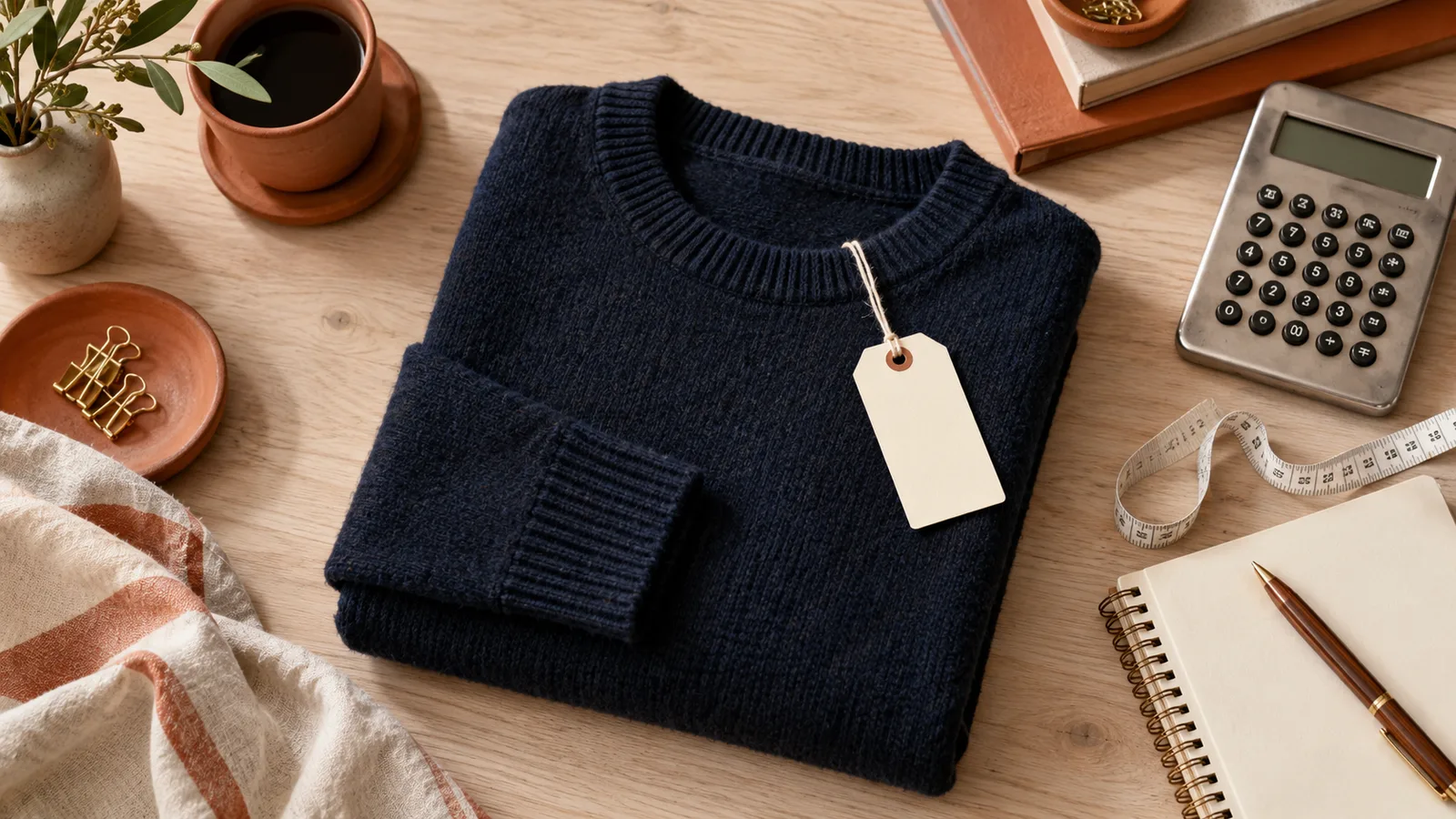
A useful asking price starts with comparable garments, not the original receipt alone. Your purchase price explains your spending; it does not establish what another person will pay today.
Build a small comparison set
Find five to ten listings with the same brand, garment type, size range and similar condition. For jeans, include the model and leg length; for outerwear, compare material and lining. Exclude bundles, rare collaborations and new-with-tags items if yours is visibly worn.
Record asking price, condition, included accessories and the date. An active listing is an offer, not a confirmed sale. A listing that disappears may have been deleted, so do not label its price as a transaction.
Set an asking price and a floor
Write down the amount you would accept after any seller costs shown for your transaction. Keep a negotiation margin only if you actually want to negotiate.
Illustrative example, not market data: comparable asking prices are 18, 20, 22, 23 and 30 units of your local currency. The middle value is 22. If your item lacks the original belt, investigate whether a lower price is appropriate instead of copying 30. If your own minimum is 18, an offer of 17 falls below that floor.
Review one variable at a time
First correct missing measurements, weak photographs or an inaccurate condition field. Then decide whether the price still reflects comparable offers. Note the date of a price change and observe comparable time windows; a single quiet evening proves little.
For business resale, also account for acquisition, cleaning, packaging, time and unsold stock. This simple exercise is not a tax calculation. Check current transaction conditions in Vinted’s rules, reviewed 8 October 2026. See the description template to make the condition evidence clear.